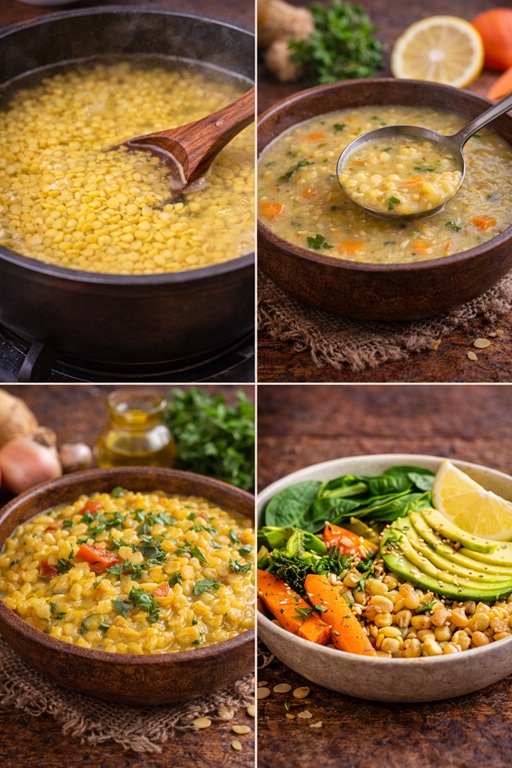
Moong Dal (geschälte Mungbohnen) is one of the easiest legumes you can cook—yet it’s still underused in Germany. Most people default to lentils because they’re familiar, but Moong Dal has a stronger advantage where it actually matters: speed, digestion, and flexibility.
If you want a high-protein, plant-based ingredient that doesn’t cause heaviness, Moong Dal is one of the most practical options available. This guide shows you exactly how to cook it, avoid common mistakes, and use it in simple, German-friendly recipes.
What Makes Moong Dal Different?
Before cooking, understand why it behaves differently from other legumes.
- It’s already split and de-skinned
- It cooks faster than chickpeas
- It’s lighter than lentils on digestion
Bottom line:
You’re not dealing with a “hard legume.” You’re dealing with a quick-cooking protein base.
Basic Method: How to Cook Moong Dal (Step-by-Step)
This is the foundation. If you get this wrong, every recipe fails.
Ingredients:
- 1 cup Moong Dal (geschälte Mungbohnen)
- 3 cups water
- Salt (add later)
Step 1: Rinse Properly
Wash the dal under running water until it runs clear.
Why it matters:
- Removes dust and excess starch
- Improves taste and texture
Step 2: Skip Soaking (Yes, Skip It)
Unlike chickpeas:
- No soaking required
- Saves time
Optional: 15–20 min soak if you want ultra-fast cooking
Step 3: Cook
- Add dal + water to a pot
- Bring to boil
- Reduce heat and simmer
Cooking Time:
- 15–20 minutes
Step 4: Check Texture
- Soft but not fully mushy
- Press between fingers → should break easily
Step 5: Add Salt at the End
Salt early = tougher texture
Salt late = better softness
Pressure Cooker Method (For Speed)
If you want efficiency:
- Add dal + water
- Cook for 5–7 minutes after pressure
Done.
Reality:
Moong Dal is already fast. Pressure cooker just makes it faster.
Common Mistakes That Ruin Moong Dal
1. Overcooking
Moong Dal turns into paste quickly.
Fix:
- Monitor after 12–15 minutes
2. Adding Too Much Water
Result: watery, flavorless mess
Fix:
- Control water ratio
3. Over-spicing
Big mistake for German audience.
Fix:
- Keep flavors mild and clean
4. Ignoring Texture
Too mushy or too hard = bad experience
Easy Recipes for German Kitchens
These are not traditional recipes. These are adapted for usability and repeat consumption.
1. Light Moong Dal Soup (German-Style)
Why this works:
Feels familiar. Easy entry point.
Ingredients:
- Cooked Moong Dal
- Carrot
- Celery
- Onion
- Vegetable broth
- Olive oil
Steps:
- Sauté vegetables
- Add dal + broth
- Simmer 10 minutes
- Blend partially
Result:
- Creamy, light soup
- High protein without heaviness
2. Mild Moong Dal Curry
Why this works:
Introduces flavor without overwhelming spice
Ingredients:
- Cooked Moong Dal
- Onion
- Garlic
- Tomato
- Turmeric
- Cumin
- Olive oil
Steps:
- Sauté onion + garlic
- Add tomato → cook soft
- Add spices
- Add dal + water
- Simmer 10 minutes
Key Tip:
Keep spice level low. German palate prefers mild.
3. Moong Dal Protein Bowl
Why this works:
Matches modern eating trends
Ingredients:
- Cooked Moong Dal
- Roasted vegetables (zucchini, carrot, paprika)
- Olive oil
- Lemon juice
Steps:
- Roast vegetables (200°C, 20 min)
- Mix with dal
- Add dressing
Result:
- Clean, high-protein meal
- No complexity
4. Cold Moong Dal Salad
Why this works:
Cold meals are common in Germany
Ingredients:
- Cooked & cooled dal
- Cucumber
- Tomato
- Herbs
- Vinegar + olive oil
Steps:
Mix everything and chill.
Result:
Light, refreshing, high-protein salad
5. Moong Dal for Meal Prep
Strategy:
Cook once → use for multiple meals
Use it for:
- Soup base
- Bowl ingredient
- Side dish
Storage:
- Fridge: 3–4 days
- Freezer: up to 1 month
Cooking Tips That Actually Matter
1. Batch Cooking Wins
Stop cooking daily. Cook once.
2. Flavor Control
Start mild → adjust later
3. Texture Control
- Thick dal → less water
- Soup → more water
4. Pair Smartly
Combine with:
- Rice
- Bread
- Vegetables
Why Moong Dal Works for Germany
Germany prefers:
- Simple cooking
- Fast meals
- Light digestion
Moong Dal matches all three.
Compared to Other Legumes:
- Faster than chickpeas
- Lighter than lentils (for some people)
- Easier to adapt
SEO Layer (What You Should Target)
Primary keywords:
- Mungbohnen kochen
- Moong Dal Rezept einfach
Secondary:
- gelbe Mungbohnen Rezept
- vegane Protein Rezepte Deutschland
Real-World Use Case
If someone is:
- Switching to vegan diet
- Trying to lose weight
- Facing digestion issues
Moong Dal becomes:
- Daily protein source
- Easy-to-cook solution
Biggest Mistake People Make
They treat Moong Dal like:
- Lentils
- Chickpeas
It’s not.
The Correct Approach:
- Keep it simple
- Keep it light
- Keep it repeatable
Final Verdict
Moong Dal is one of the most efficient foods you can cook:
- Fast cooking
- High protein
- Easy digestion
For German kitchens, it solves the biggest barriers:
- Time
- complexity
- heaviness
What You Should Do Next
- Start with basic cooking method
- Try soup or bowl
- Keep recipes simple
Bottom Line
You don’t need complex recipes to use Moong Dal.
You need:
- clarity
- simplicity
- consistency
That’s what makes it work.
If you want next level:
I can turn this into:
- SEO landing page
- Schema-optimized content
- Internal linking strategy
Because writing recipes is easy.
Getting them ranked and used is the real game.