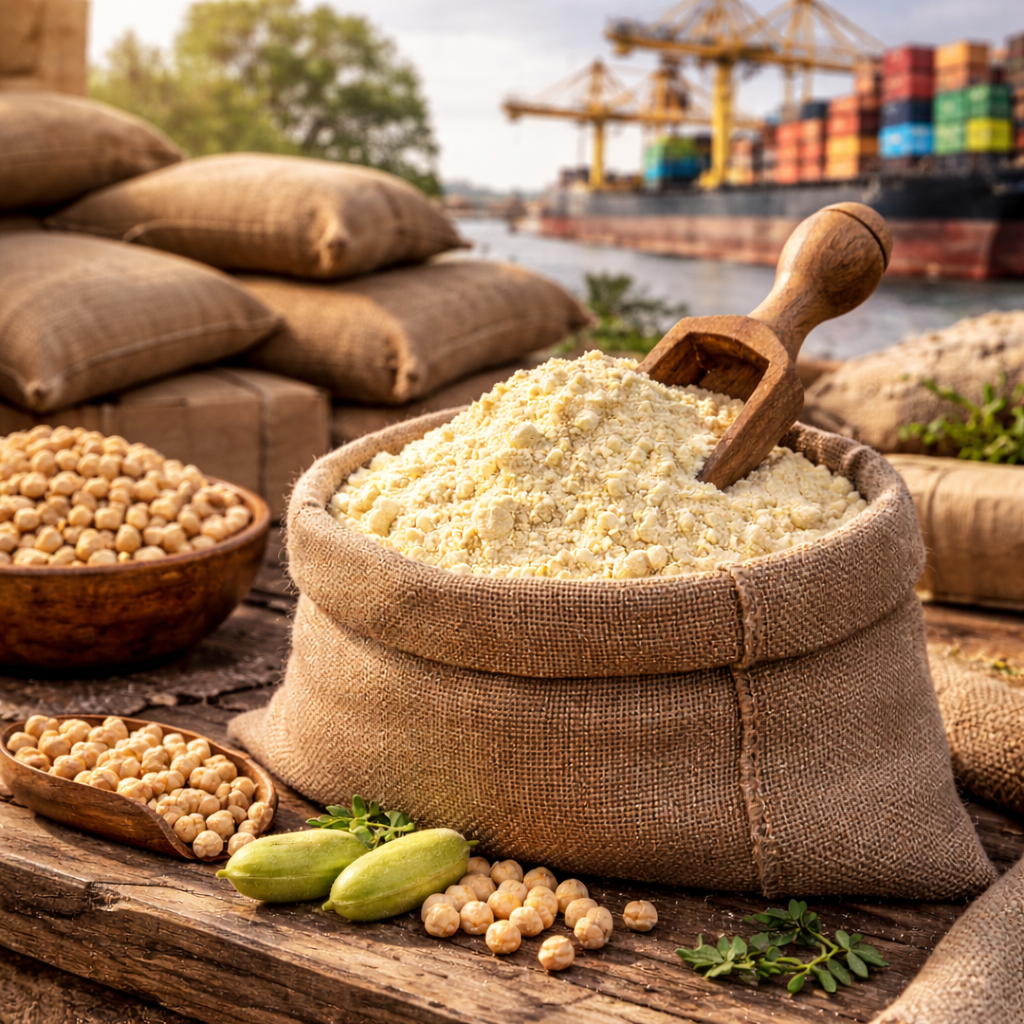
Gram flour, also known as Besan or Kichererbsenmehl in Germany, is a finely ground flour made from dried chickpeas. While it has been a staple in Indian and Middle Eastern kitchens for centuries, it is now gaining attention in Germany due to its high protein content, gluten-free nature, and versatility.
As more people in Germany shift toward plant-based diets, gluten-free alternatives, and healthier cooking habits, gram flour is emerging as a powerful ingredient that solves multiple problems at once—nutrition, digestion, and functionality.
This guide breaks down what gram flour really is, its benefits, and how to use it effectively in German kitchens without overcomplicating things.
What Is Gram Flour (Besan)?
Gram flour is made by grinding dried chickpeas into a fine powder. Depending on the type of chickpeas used, there are slight variations:
Types of Gram Flour:
1. Besan (From Split Brown Chickpeas)
- Made from chana dal (split chickpeas)
- Fine texture
- Slightly nutty flavor
- Common in Indian cooking
2. Chickpea Flour (From White Chickpeas)
- Made from whole chickpeas
- Slightly different taste
- More common in European markets
Important Clarification (Critical for Germany)
In Germany, both are often labeled as:
- Kichererbsenmehl
But they are not identical.
Reality:
For most practical uses, both work similarly—but traditional Besan has a stronger flavor and better binding properties.
Why Gram Flour Is Gaining Popularity in Germany
Germany is seeing strong growth in:
- Vegan and vegetarian diets
- Gluten-free lifestyles
- High-protein food demand
Gram flour fits perfectly into all three.
Key Reasons:
- Naturally gluten-free
- High in plant-based protein
- Works as a binder without eggs
- Easy to store and use
Blunt Truth
Most flours are just fillers.
Gram flour is functional nutrition.
Nutritional Value of Gram Flour
Per 100g (approximate):
- Protein: 20–22g
- Carbohydrates: 55–60g
- Fiber: 10–12g
- Fat: 5–6g
- Iron: High
- Magnesium & Potassium: Present
What This Actually Means
- Higher protein than wheat flour
- Better satiety (keeps you full longer)
- Supports plant-based diets
Compared to Wheat Flour:
| Feature | Gram Flour | Wheat Flour |
|---|---|---|
| Protein | Higher | Lower |
| Gluten | None | Present |
| Digestion | Moderate | Can be heavy for some |
Health Benefits of Gram Flour
1. High Protein for Plant-Based Diets
Gram flour provides a solid protein base for:
- Vegans
- Vegetarians
- Fitness-focused diets
2. Gluten-Free Alternative
Perfect for people with:
- Gluten intolerance
- Celiac concerns
- Digestive sensitivity
3. Supports Weight Management
- High satiety
- Reduces overeating
- Stable energy release
4. Helps Control Blood Sugar
- Low glycemic index
- Prevents spikes
5. Multi-Functional Ingredient
Not just nutrition—functionality:
- Binding
- Thickening
- Structure
How to Use Gram Flour in German Kitchens
This is where most content fails. You don’t need complex recipes—you need adaptation.
1. Vegan Pancakes (Gluten-Free)
Why this works:
- Simple
- Familiar format
Basic Idea:
- Gram flour + water + spices
- Cook like pancakes
Result:
- High-protein breakfast
- Egg-free alternative
2. Thickening Soups and Sauces
Why this works:
- Fits into European cooking
Use:
- Add small amount to soups
- Stir while cooking
Result:
- Creamy texture without dairy
3. Batter for Frying (Pakora Style – Mild)
Why this works:
- Crispy coating
Use:
- Mix with water + salt
- Coat vegetables
- Fry
Key Tip:
Keep spices mild for German taste.
4. Binding Agent (Egg Replacement)
Why this works:
- Huge demand in vegan cooking
Use:
- Add to cutlets, patties
Result:
- Holds structure without eggs
5. Gluten-Free Baking
Why this works:
- Growing trend in Germany
Use:
- Mix with other flours
- Use in breads and snacks
6. Skincare & Personal Care
Why this matters:
- Unique positioning advantage
Uses:
- Face packs
- Oil control
- Natural cleanser
Cooking Tips That Actually Matter
1. Don’t Use Too Much
Gram flour is dense. Overuse = heavy texture.
2. Cook It Properly
Raw gram flour tastes bitter.
3. Balance Flavor
- Works best with mild spices
- Don’t overpower
4. Combine with Other Ingredients
Best results come from mixing, not using alone.
Where to Buy Gram Flour in Germany
This is critical for SEO and conversion.
1. Online Platforms
- Amazon.de
- eBay.de
- Vegan stores
Search terms:
- Kichererbsenmehl kaufen
- Besan Germany
2. Indian & Asian Stores
Best quality source.
3. Organic Stores (Bio Shops)
Limited but growing availability.
4. Bulk Suppliers
For:
- Restaurants
- Food brands
What to Look for When Buying
Quality Indicators:
- Fine texture
- No lumps
- Fresh smell
Organic vs Regular:
- Organic = premium segment
- Regular = cost-effective
Why Gram Flour Is Still Underrated in Germany
Simple reason:
- Lack of awareness
- Confusion with other flours
But That’s the Opportunity
Low competition = easier ranking
Biggest Mistake People Make
They treat gram flour like:
- Wheat flour
That’s Wrong
It’s:
- Denser
- More functional
- Needs different handling
Final Verdict
Gram flour is not just an alternative—it’s a superior functional ingredient for specific use cases.
Best For:
- Gluten-free diets
- Vegan cooking
- High-protein meals
Not Ideal For:
- Direct 1:1 wheat replacement (without adjustment)